

Introduction: Why You Need to Improve Website SEO

If you want to improve website SEO, your first goal should be helping the right people discover your website through search engines. Search engine optimisation (SEO) helps search engines crawl, understand, and display your pages when people search for relevant information, products, or services.
A website may have attractive designs and valuable services, but it can still struggle to attract visitors if its pages are difficult to discover. Learning how to improve website SEO helps you identify technical problems, create more useful content, organise information clearly, and provide a better experience for visitors.
SEO is not a one-time activity. Search trends change, competitors publish new content, and search engines continually improve their systems. Therefore, website owners need a consistent process for reviewing performance and making improvements.
This guide explains 11 practical strategies that bloggers, students, freelancers, small businesses, and website owners can use to improve website SEO. You will learn how to conduct an audit, research keywords, optimise content, improve technical performance, earn relevant backlinks, and measure results.
These strategies follow established SEO principles, including Google’s SEO Starter Guide. Although no technique guarantees a particular ranking, applying these practices can help build a stronger website. You can also explore more digital marketing insights to learn about SEO and online business growth.
1. Conduct a Complete Website SEO Audit
A website SEO audit identifies problems that may prevent your pages from performing well in search results. Before publishing more articles or building backlinks, check whether your existing website is accessible, indexable, and easy to navigate.
Google Search Console is a useful starting point because it provides information about indexing, search performance, and certain website issues.
During your audit, review the following areas:
Indexing: Check whether important pages are indexed and whether accidental noindex directives prevent them from appearing in search results.
Broken links: Find internal links that lead to missing pages and external links that no longer work.
Page titles: Identify missing, duplicate, or unclear title tags.
Content quality: Review pages that contain outdated information, little original value, or content that does not match search intent.
Mobile usability: Check whether visitors can read and navigate your pages comfortably on smartphones.
Security: Make sure your website uses HTTPS and investigate any security warnings.
Create a spreadsheet containing the affected URL, the problem, its priority, and the action required. Fix critical problems first. For example, correcting a blocked service page is usually more important than adjusting the filename of an old decorative image.
A regular audit makes it easier to improve website SEO systematically instead of making random changes without understanding their impact.
2. Research Keywords Based on Search Intent
Keyword research helps you discover the words and phrases your target audience uses in search engines. However, choosing keywords only because they have high search volume can lead to disappointing results.
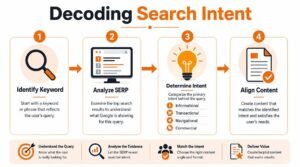
To improve website SEO, you must understand search intent: the reason behind a search query.
Search intent generally falls into four categories:
Informational: The user wants to learn something, such as “what is technical SEO?”
Commercial: The user compares options, such as “best SEO tools for beginners.”
Transactional: The user wants to take an action, such as purchasing an SEO course.
Navigational: The user wants to find a specific website or page.
Choose keywords that match the purpose of your content. A detailed tutorial should answer questions and explain processes, while a service page should clearly describe the service and how to enquire about it.
Long-tail keywords can also be useful. For example, “how to improve website SEO for a small business” is more specific than simply “SEO.” Specific searches may reveal clearer needs and help you create focused content.
Use Google Search Console, autocomplete suggestions, related searches, and reputable keyword research tools to discover ideas. Remember that keyword tools provide estimates rather than guaranteed search volumes.
Before publishing, review the existing search results. Identify what they cover, what questions they answer, and where you can provide additional value. This research helps you create content that satisfies readers rather than simply repeating popular phrases.
3. Optimise Page Titles and Meta Descriptions
Page titles help users and search engines understand the subject of a page. A clear title can communicate relevance and encourage searchers to explore your content.
For this article, the title is:
How to Improve Website SEO: 11 Proven Strategies for Better Rankings
It includes the primary keyword near the beginning and tells readers what they can expect. The number also communicates that the article contains a practical list of strategies.
When writing titles for other pages, follow these practices:
Give every important page a unique and descriptive title.
Include the main keyword where it sounds natural.
Make the title accurately reflect the page content.
Avoid repeating the same keyword unnecessarily.
Keep the title concise enough to communicate its main message clearly.
A meta description provides a short summary of the page. Although it is not a direct ranking factor in the same way as many people assume, a useful description can help searchers decide whether a result is relevant to them.
For example:
Learn how to improve website SEO with 11 practical strategies for keyword research, technical optimisation, helpful content, backlinks, and better website performance.
Google may generate a different search snippet depending on the query. Therefore, write accurate titles and descriptions, but do not assume that Google will always display them exactly as provided.
4. Create Helpful, People-First Content
High-quality content gives visitors a reason to visit your website, read your pages, and return when they need more information. Publishing numerous articles without offering genuine value is unlikely to create a strong long-term SEO strategy.
If you want to improve website SEO, answer the reader’s main question clearly and then provide the supporting details needed to understand or apply the answer.
Use the following principles when creating content:
Answer the main question early. Avoid long introductions that delay the information readers came to find. Explain the core idea first, then expand with examples and practical steps.
Add original value. Include your own observations, screenshots, experiments, examples, or useful templates wherever possible. These elements can make your content more valuable than a generic summary.
Use trustworthy sources. Support factual claims with relevant documentation and reliable references. For technical SEO advice, Google’s official Search Central documentation is a useful resource.
Keep information current. Review articles when tools, recommendations, or processes change. Remove outdated instructions and replace them with accurate information.
Make content easy to read. Use descriptive headings, short paragraphs, lists, and examples to help visitors find specific answers quickly.
Google’s helpful content guidance offers useful questions for evaluating whether a page provides genuine value.
Before publishing, ask yourself: Does this article solve a real problem? Does it explain the topic accurately? Does it offer something useful beyond what readers can already find elsewhere?
Content that answers these questions gives your website a stronger foundation for sustainable search visibility.
5. Improve Website Structure and Internal Linking
A well-organised website helps visitors discover information without unnecessary effort. It also helps search engines understand the relationship between different pages.
Start by grouping related content into clear categories. For example, a digital marketing website might organise its articles into SEO, social media marketing, Google Ads, website optimisation, and content marketing.
Keep important pages easy to reach from the homepage or relevant category pages. Avoid creating complicated navigation systems that force visitors to click through many unrelated pages.
Internal linking is another important part of website structure. Internal links connect pages on the same domain and help visitors discover related information.
To improve website SEO through internal linking:
Link relevant blog posts to related service pages.
Connect new articles with older, useful resources.
Use descriptive anchor text instead of vague phrases such as “click here.”
Find important pages that have no internal links pointing to them.
Remove unnecessary links that distract readers or provide little value.
For example, an article about keyword research could link to a related guide about technical SEO or a page explaining digital marketing services.
Do not add internal links simply to increase their number. Each link should provide a sensible next step for the reader. A small number of relevant links can be more useful than a long list of unrelated destinations.
6. Strengthen Technical SEO
Technical SEO focuses on the website elements that help search engines access, crawl, interpret, and index your pages. Even useful content may struggle to appear in search results if important technical settings are incorrect.
Review these essential areas when planning to improve website SEO.
XML sitemap: Maintain a sitemap containing the canonical URLs you want search engines to discover. Submit it through Google Search Console and check for processing errors.
Robots.txt: Use this file to manage crawling where appropriate. Do not rely on robots.txt to keep private information out of search results.
Canonical URLs: Use canonical tags to identify the preferred version of duplicate or substantially similar pages when appropriate.
HTTPS: Secure your website with HTTPS and ensure that HTTP URLs redirect correctly to their secure versions.
Redirects: Use suitable permanent redirects when moving pages to new URLs. Avoid unnecessary redirect chains and redirecting unrelated pages to the homepage.
Noindex directives: Use noindex instructions only when you intentionally want a page excluded from search results. Check that important pages are not accidentally marked noindex.
WordPress users should also review their site’s search engine visibility settings after launch or a redesign. An incorrect setting can prevent search engines from indexing the website as intended.
If an important page does not appear in Google, inspect its URL through Google Search Console. Review the reported indexing status and correct the underlying issue before requesting another crawl.
Technical improvements should support accessibility and discoverability. Avoid adding complex features that do not solve a real problem.
7. Improve Website Speed and User Experience
Visitors expect websites to load quickly and work smoothly on their devices. Slow pages, unstable layouts, difficult navigation, and tiny buttons can make it harder for people to use your website.
Improving performance can support your broader effort to improve website SEO, although speed alone does not guarantee better rankings.
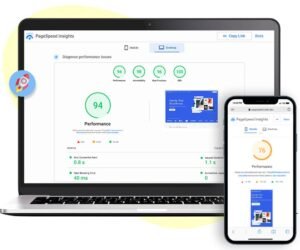
Use PageSpeed Insights to test important pages. The tool can provide laboratory performance results and real-user field data when sufficient data is available.
Start with the problems that have the greatest impact.
Compress images: Reduce file sizes while maintaining acceptable visual quality.
Enable caching: Use suitable caching settings to reduce repeated work for the server.
Reduce unnecessary scripts: Remove unused plugins, third-party scripts, and resources that slow down important pages.
Improve hosting: Choose hosting that can reliably handle your website’s traffic and technical requirements.
Prevent layout shifts: Set image dimensions and reserve space for advertisements or embedded content.
Test mobile pages: Check readability, navigation, forms, and buttons on actual mobile devices.
Google’s Core Web Vitals measure loading performance, responsiveness, and visual stability. Reviewing these metrics can help you identify specific user experience problems.
If you use WordPress, avoid installing multiple plugins that perform the same optimisation tasks. Test changes carefully, because aggressive caching or script optimisation can sometimes break page layouts or interactive features.
Focus on making the website genuinely easier to use rather than chasing a perfect performance score.
8. Optimise Images for Search and Accessibility
Images can make articles easier to understand, demonstrate processes, and provide additional context. They may also help visitors discover your pages through image search.
Image optimisation should therefore be part of your strategy to improve website SEO, but it must also support accessibility and page performance.
Follow these practices:
Choose descriptive filenames. Instead of uploading an image as IMG1234.webp, use a meaningful filename such as website-seo-audit-checklist.webp when it accurately describes the image.
Write useful alt text. Explain the image’s relevant content for visitors using screen readers. For example, an image showing a website audit dashboard might use the alt text “Website SEO audit dashboard showing performance metrics.”
Compress image files. Use appropriate formats such as WebP or AVIF where supported, and select dimensions that match how the image will appear on the page.
Add relevant visuals. Use screenshots, diagrams, original infographics, or process illustrations when they help readers understand the topic.
Use lazy loading appropriately. Images farther down a page can often load lazily. Avoid delaying the main image that visitors see immediately when the page opens.
Decorative images should generally use an empty alt attribute so screen readers can skip them.
Do not add the focus keyword to every image’s alt text. Describe what each image actually shows. Accurate descriptions are more useful than repetitive keyword placement.
9. Build Relevant, High-Quality Backlinks
Backlinks are links from other websites to your website. Relevant links can help people discover your content and may contribute to search visibility. However, the quality and context of links matter more than simply collecting large numbers.
To improve website SEO through link earning, publish resources that other website owners have a genuine reason to reference.
Consider creating:
Original research or survey results.
Free checklists and practical templates.
Detailed guides with examples.
Useful calculators or small tools.
Original infographics that explain complicated topics.
Expert contributions to relevant publications.
You can also contact relevant website owners when you have a resource that genuinely improves one of their articles. Explain what your resource offers and why their readers may find it useful.
Avoid buying links intended to manipulate rankings, participating in automated link schemes, or publishing low-quality guest posts solely to obtain backlinks. These practices can create risks rather than sustainable benefits.
Remember that you cannot force another website to provide a dofollow link. The publisher controls the link attributes, so concentrate on relevance, trust, and the usefulness of the content you offer.
A smaller number of genuinely relevant links can be more valuable than many unrelated links from low-quality websites.
10. Use Structured Data Correctly
Structured data is a standardised format that provides search engines with additional information about a page. Websites commonly implement it using JSON-LD, although other supported formats exist.
Depending on the page type and Google’s eligibility requirements, appropriate structured data may help a page qualify for enhanced search appearances.
Examples include:
Article: Information about an article, such as its headline and author.
Organization: Details about an organisation.
BreadcrumbList: Information about a page’s position in a website hierarchy.
Product: Relevant information about a product.
LocalBusiness: Details about an eligible local business.
Choose markup that matches the page’s actual content. Validate supported markup with Google’s structured data introduction and the Rich Results Test where applicable.
If you use WordPress and an SEO plugin such as Rank Math, review its schema settings before adding custom markup. Avoid creating duplicate or conflicting schema unnecessarily.
Structured data does not guarantee higher rankings or rich results. Never mark up fake reviews, inaccurate ratings, or information that visitors cannot see.
Correct implementation helps search engines interpret your content more clearly while keeping the page accurate and trustworthy.
11. Track SEO Performance and Improve Continuously
SEO work becomes more effective when you measure results instead of relying on assumptions. Tracking helps you identify which pages attract visitors, which searches generate impressions, and where additional improvements may be useful.
Google Search Console provides information about clicks, impressions, average position, and the queries associated with your website’s Google Search performance.
Review the data regularly and look for patterns.
High impressions but few clicks: Consider whether the title and description clearly communicate the page’s value. Compare them with the search intent and competing results.
Pages close to stronger positions: Check whether the page answers important questions, includes relevant examples, and links to useful supporting resources. Avoid changing content without a clear reason.
Declining traffic: Investigate indexing problems, seasonal changes, outdated information, and changes in search results before deciding what to fix.
Traffic without conversions: Review whether the page attracts the right audience and offers an appropriate next step, such as reading a related guide or contacting your business.
Use an analytics tool to measure meaningful actions, including enquiries, form submissions, purchases, or other business goals.
When you improve website SEO, document significant changes and review their effects after a reasonable period. Search engines may need time to recrawl pages and reassess their relevance, and results can vary.
Avoid changing multiple major elements at once if you need to understand which changes made a difference. A consistent review process helps you make more informed decisions over time.
Common Website SEO Mistakes to Avoid
Even a well-designed website can struggle when its SEO strategy contains avoidable mistakes. Keep the following issues in mind as you improve website SEO.
Targeting keywords without understanding intent: A keyword may receive searches but still attract visitors who do not need your content or services.
Publishing thin or copied content: Pages that provide little original value may fail to satisfy readers. Prioritise usefulness over publishing frequency.
Stuffing keywords: Repeating the same phrase excessively can make content difficult to read. Use the focus keyword where relevant and rely on natural variations elsewhere.
Ignoring technical settings: Accidental noindex directives, broken redirects, and incorrect canonical tags can interfere with search visibility.
Neglecting mobile users: A page that works well on a desktop may still be difficult to read or navigate on a phone.
Buying manipulative backlinks: Link schemes can violate Google’s spam policies and undermine your long-term strategy.
Changing URLs without redirects: Moving a page without appropriate redirects can break existing links and make the transition more difficult for visitors and search engines.
Expecting instant results: SEO requires ongoing work. Evaluate progress over time rather than expecting a sudden ranking improvement after every update.
Avoiding these mistakes helps you focus on sustainable improvements instead of shortcuts.
A Practical 30-Day Plan to Improve Website SEO
You do not need to implement every change in one day. A simple 30-day plan can help you organise the work, prioritise important tasks, and track your progress.
Week 1: Audit and Setup
Verify your website in Google Search Console, submit your XML sitemap, review indexing status, and identify broken links or duplicate titles. Create a list of your most important pages and record the issues that need attention.
Week 2: Keywords and Content
Research the search intent behind your target keywords. Review your important pages and improve their titles, headings, introductions, and content quality. Update outdated information and add relevant internal links.
Week 3: Technical SEO and Performance
Review redirects, canonical tags, HTTPS, and noindex settings. Test important pages with PageSpeed Insights, compress oversized images, and fix significant performance problems.
Week 4: Links and Measurement
Identify opportunities to create useful resources that others may reference. Improve internal linking, review Search Console data, and establish a monthly reporting routine. Record completed changes so you can evaluate their effects later.
At the end of the month, review what you completed and decide which tasks deserve further attention. Some changes may take longer than 30 days to show measurable results, so continue monitoring performance.
Conclusion
Learning how to improve website SEO means understanding how people search, creating genuinely helpful content, maintaining a technically accessible website, and measuring performance over time.
Start with a website audit, choose keywords that match user intent, improve important pages, and make sure visitors can navigate your site comfortably. Support those efforts with relevant images, useful internal links, responsible backlink earning, and accurate structured data.
Remember that SEO is an ongoing process rather than a one-time checklist. No method guarantees a specific ranking, and results depend on your website, competition, content, and many other factors.
Choose a few high-impact improvements, implement them carefully, and review your results in Google Search Console. With consistent work and a focus on helping real users, you can build a stronger foundation for organic search visibility.
Website: https://ansifmarketer.online/
Author Name: Ansif Muhammed