

Table of Contents
ToggleShort-Form Video Marketing: 10 Proven Trends for 2026
Short-form video marketing has become one of the fastest ways for brands to get noticed. Platforms like Instagram Reels, YouTube Shorts, and TikTok put vertical video at the centre of how people discover products, learn new things, and decide what to buy.
This guide covers ten practical trends, from hooks and user-generated content to social commerce, live shopping, AI editing, and measuring results. It is written for business owners, freelancers, and marketing students who want a clear, realistic plan.
1. Why Vertical Video Is the Main Attention Gateway
Vertical video is now a core way people consume content on their phones. Feeds on Reels, Shorts, and TikTok are built around quick, full-screen clips shaped by what each viewer seems interested in.
People expect a short video to be clear and engaging within seconds. Brands that ignore vertical video may find it harder to reach audiences who spend most of their time in these feeds. Start by filming in 9:16 format, keeping text inside safe areas, and making each clip easy to follow without sound.
2. In-App Checkout and Social Commerce
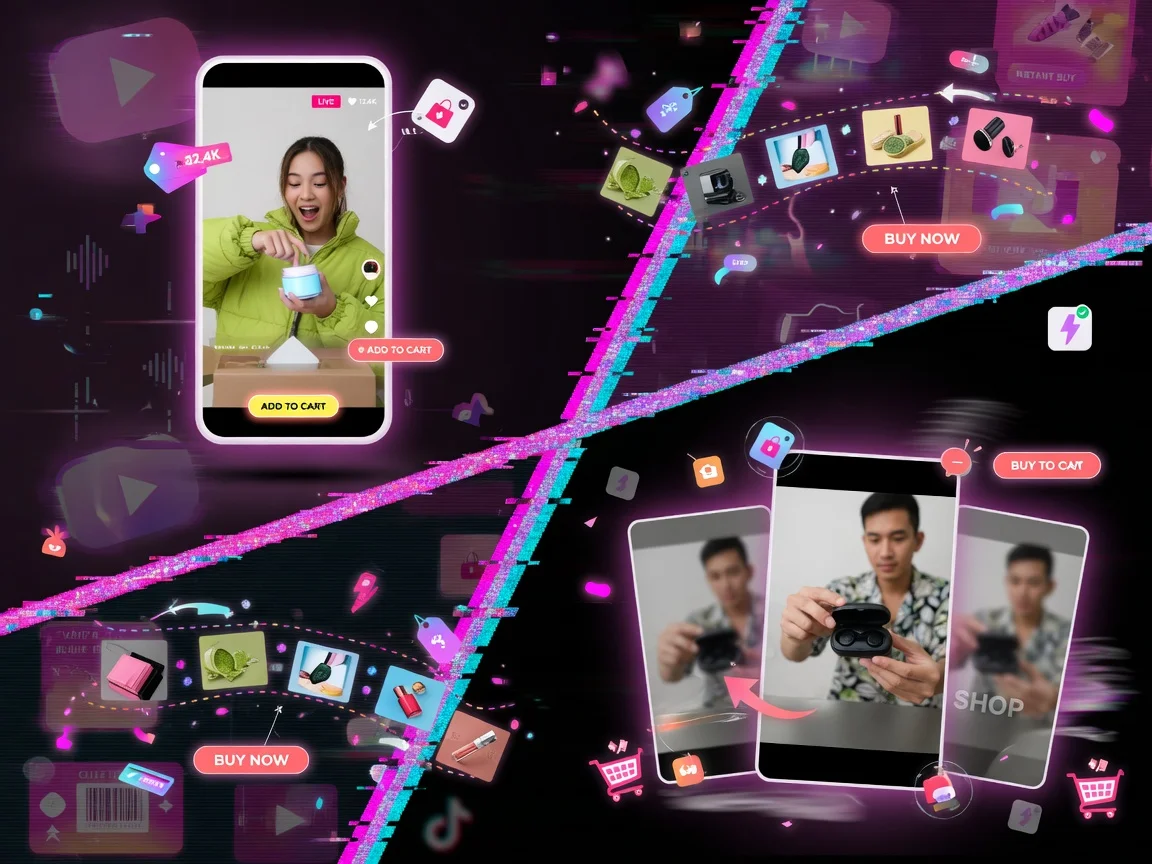
Social commerce connects entertainment with shopping. Depending on the platform and your country, viewers can tap a product tag, choose options, and buy without leaving the app, or move smoothly to your online store.
Make every video support a next step. Show the product clearly, mention the price or offer where possible, and use pinned links or product tags. Check which shopping features are available in your market before you plan a campaign.
3. Authenticity and User-Generated Content Beat Over-Polished Ads
Highly polished commercials often feel distant on a social feed. Many viewers respond better to real, relatable content such as customer reviews, unboxings, honest demonstrations, and founder stories.
User-generated content (UGC) can build trust because it comes from real people, not just the brand. Ask customers for permission before sharing their videos, and make sure creators disclose paid partnerships clearly. Follow your country’s advertising rules, such as the ASCI guidelines in India or the FTC rules in the US. Never invent reviews or fake testimonials.
4. Hooks and Retention: Win the First Three Seconds
The opening of a short video matters. If viewers don’t see a reason to stay, they scroll on. Platforms generally favour videos that hold attention, so retention and completion rate are useful metrics to watch.
Try these hook ideas:
- Start with a clear question or bold claim.
- Add a large on-screen headline.
- Show the result first, then explain how you got there.
- Use movement or a visual change early.
No hook can guarantee reach, so test several versions and keep what works.
5. Micro-Dramas and Episodic Storytelling
Feeds are crowded, so some brands use short, connected episodes instead of one-off sales pitches. Examples include a multi-part how-to series, a behind-the-scenes story, or a customer journey told across several clips.
A series gives viewers a reason to follow your account and watch the next part. Keep each episode to one idea, end with a small cliffhanger or question, and stay honest and useful instead of exaggerating the drama.
6. Live Shopping and Interactive Engagement
Live streams on Instagram, TikTok, and YouTube let brands demonstrate products, answer questions in real time, and share limited-time offers. Seeing other people comment and ask questions can add social proof.
To run a good live session, plan a simple outline, prepare answers to common questions, test your internet connection, and have a team member monitor comments. Results vary by audience and product, so measure sales, attendance, and follow-up enquiries.
7. AI-Assisted Video Editing and Localisation
AI tools can save time on short-form video marketing. Many editing apps can turn a long podcast, webinar, or demo into several vertical clips with automatic captions and text overlays. Some tools also help translate or dub videos for other languages.
Use these tools carefully. Always review captions and translations for accuracy, get consent before cloning anyone’s voice or likeness, and follow platform rules about labelling AI-generated content where required. Our guide on AI personalization in marketing covers responsible AI use in more detail.
8. Optimise Videos for Social Search
People now search TikTok, Instagram, and YouTube for recommendations, tutorials, local places, and reviews. To help your videos appear, use search-friendly captions, say your main topic out loud, and add a clear on-screen title.
This is the same thinking behind social search optimization. Learn the full approach in our guide to social search optimization.
9. Repurpose With the Pillar-to-Micro Framework
Creating brand-new videos for every channel takes a lot of time. A pillar-to-micro approach starts with one longer piece, such as an expert interview, a YouTube video, or a live session. You then cut it into five to ten short clips, carousels, and text summaries.
This saves effort and keeps your message consistent across platforms. Edit each version to suit the channel instead of posting identical content everywhere. For a step-by-step plan, see our 90-day digital marketing strategy.
10. Measure Performance, Attribution, and ROI
Play counts and likes don’t show whether a video supports your business. Look deeper at:
- Average watch time and completion rate
- Saves and shares
- Link clicks and enquiries
- Sales or leads from video-linked pages
- Increases in branded searches after a campaign
Remember that many viewers won’t click straight away, so add a “How did you hear about us?” question to your forms. Use Google Analytics Help to set up tracking, and read about wider changes in our digital marketing trends 2026 guide.
Conclusion: Start Simple With Short-Form Video Marketing
Short-form video marketing works best when it is clear, honest, and tied to a goal. Start with one platform, make a few vertical videos with strong hooks, test authentic and user-generated content, and track the results.
As you learn what your audience responds to, add social commerce, live sessions, and repurposing. For help planning your video strategy, visit Ansif Marketer.
About the Author
Ansif Muhammed
Freelance Digital Marketer and SEO Specialist
Manjeri, Kerala




[…] Vertical video is no longer an optional social media tactic; it is the primary gateway for digital content consumption in 2026. Platforms like Instagram Reels, YouTube Shorts, and TikTok process billions of daily views, utilizing algorithmic feeds tailored to immediate user interest where consumers expect bite-sized, visually engaging, and fast-paced content within seconds. Modern video platforms now feature integrated native store fronts and seamless checkout capabilities, allowing users watching a product demo to tap an on-screen tag, select preferences, and complete a purchase without leaving the video player. High-budget television commercials have been replaced by authentic user-generated content (UGC), micro-influencer reviews, unboxing videos, and raw founder stories that establish genuine peer-to-peer trust. Because short-form video algorithms prioritize completion rates and initial retention, the first three seconds—known as the hook—are crucial for capturing user attention using dynamic overlays, visual hooks, and curiosity gaps. Brands are also turning to episodic micro-storytelling and micro-dramas to build binge-worthy narrative arcs that retain long-term followers. Interactive live shopping events further convert passive viewers into active buyers through real-time product demonstrations, flash discounts, and instant QA sessions. To maintain high publishing volumes, high-growth marketing teams utilize AI-assisted editing tools to dynamically reformat, caption, and localize long-form video pillars into dozens of platform-optimized vertical clips. By aligning short-form video content with social search intent and evaluating deep performance metrics such as watch duration, completion rates, and direct in-video conversions, brands turn visual content into a reliable, revenue-generating engine. […]